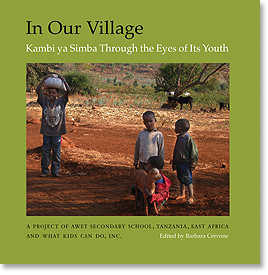
Kambi ya Simba Through the Eyes of Its Youth
By the students at Awet Secondary School in Tanzania, East Africa and What Kids Can Do
Edited by Barbara Cervone
 |
|
April 2006 ♦ Paperback ♦ 74 pages, 45 four-color photographs ♦ ISBN: 0-9762706-7-6 ♦ $10.95 (USD)
ORDER For single copies, click on the "Buy Now" button below the book cover. For multiple copies, click here to download a bulk discount order form.In Tanzania, close to the towering Mt. Kilimanjaro, the vast plains of the Serengeti, and the Great Rift Valley, lies a village called Kambi ya Simba. It is a rural village, with one road in and one road out. Its 5,000 residents, spread over 40 square kilometers, are farmers. By every measure they are poor. They know scarcity, which can make "enough" seem like plenty. In a world of digital technology and designer coffee, they illuminate the night with lanterns and drink from streams and pumps that often carry illness.
But poverty alone does not define Kambi ya Simba. As in so many small villages across the African continent, life here holds much richness and many stories. Yet a romantic view of village life also misses the mark.
In August 2005, What Kids Can Do's Barbara Cervone spent two weeks with students at Awet Secondary School in Kambi ya Simba. Together, they shared an ambitious goal: to create a topnotch collection of photographs and stories about the village. The resulting book, In Our Village: Kambi ya Simba Through the Eyes of Its Youth (Next Generation Press), has sold over 7,500 copies and sparked an international movement of students and teachers creating their own "In Our Global Village" photo essay books (over 60 to date, from the jungles of Nepal to North Hollywood, CA).
The village life Kambi ya Simba's youth document is at once ordinary and surprising, entrepreneurial and backward. Its dreams are both wide and narrow, its times both good and bad. When one of the students, Romana, was asked what she liked best about the village, she said: "Here, you know everything by heart."
None of the Awet students had ever held a camera before this project. Within minutes, however, they mastered the digital cameras WKCD had brought and carried them everywhere. They took over a thousand photographs during the two weeks and, with only a few exceptions, the pictures in the book are theirs. They also interviewed as many of the village residents as they could, from a 103-year-old elder to the doctor who runs the medical dispensary.
The following summer, Awet Secondary School students created a series of short videos about life in their village.
Proceeds from In Our Village: Kambi ya Simba Through the Eyes of Its Youth have been put into a scholarship fund to support Awet Secondary School graduates who want to attend "advanced" secondary school in towns far from Kambi ya Simba. All ten of the youth who showed me—and readers far away—their world six summers ago are college students now, in a village where few have gone “that far."
You can see the videos and learn more about the book at www.inourvillage.org
Click here to read more about the book's impact on the village